

One of the many reasons people hesitate to take up watercolor painting is that they don’t know how to draw very well.
Or they believe that to learn watercolors, you need good drawing skills.
However, even some of the most talented watercolor artists still take time to better their pencil drawing skills.
Can you learn watercolor without drawing skills?
Part of the fun of creating art is exploring different techniques, combining mediums, and seeing what you can produce.
Through the use of drawing aids, you can learn watercolor painting by focusing on water control and color mixing.
To master watercolor control, you need to learn how paint behaves on paper, timing, and paint consistency. You can still learn this if you don’t know how to draw.
Let’s take a deeper look…
Tips for people who don’t know how to draw
Just because you don’t have any drawing skills yet, notice I use the word “yet”, it doesn’t mean you can’t create beautiful watercolor pieces.
Art is all about exploring, and that means you can use other aids such as:
Tracing
Tracing is the quickest and easiest aid you can use to create your outlines.
You’ll need to either print out your reference images and hold them up against a window with your watercolor paper on top and trace.
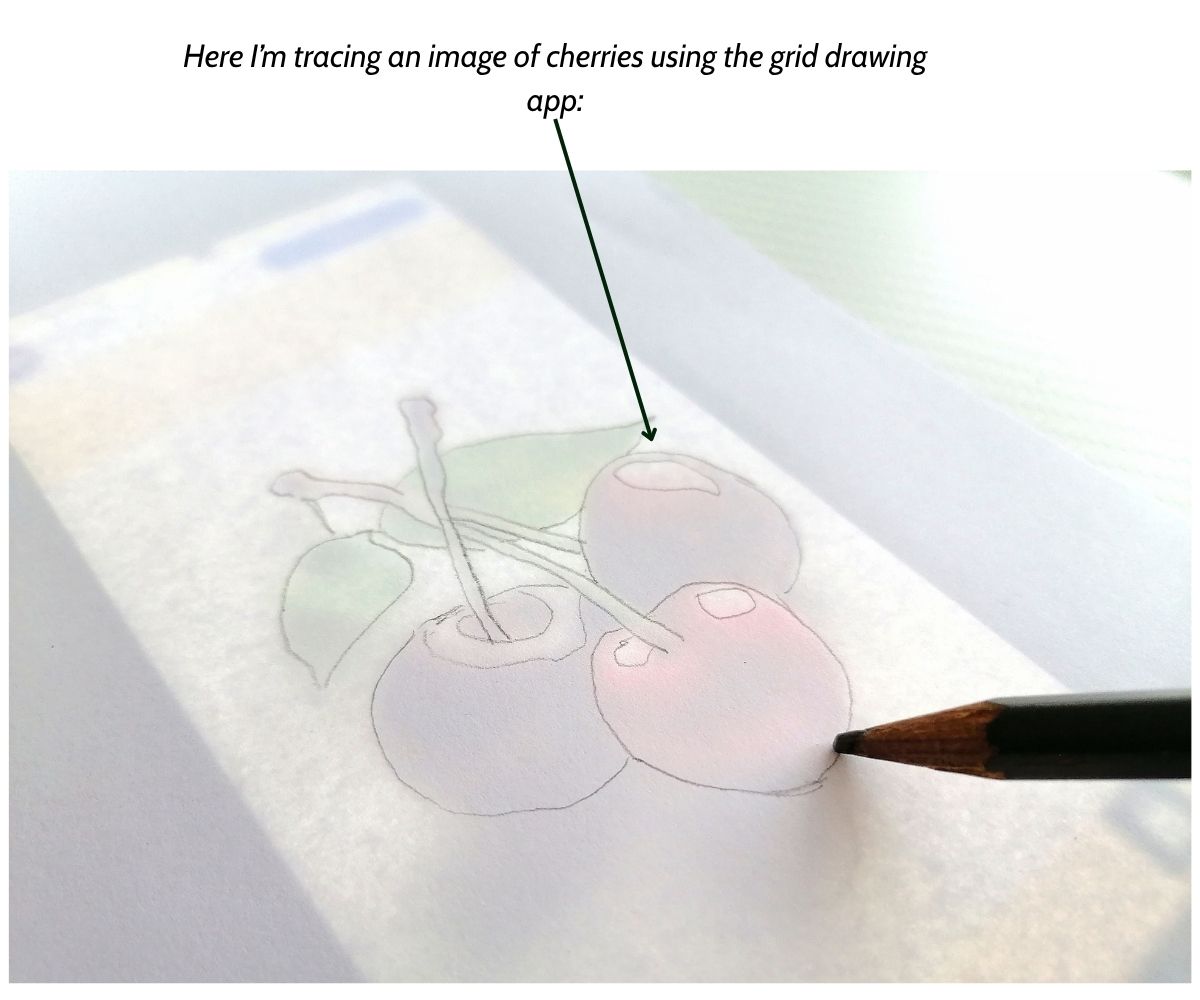
The second method is to use a phone, computer, or tablet screen with full brightness and screen lock so the image doesn’t move.
There’s an app that allows you to do this: Grid drawing
It allows you to upload and lock an image in place so you can trace the image without the screen moving.
It also has an option of adding a grid on top.
If you can’t see the image through the watercolor paper(because watercolor paper is thick). Then the next option is to trace it on normal drawing paper and then use a graphite transfer sheet to transfer it onto the watercolor paper.
Graphite transfer paper
Graphite transfer paper is an excellent tool to help you trace your reference image; however, it will require you to print out the image in the exact size you want.
To use graphite transfer paper, start by layering your watercolor paper at the bottom, then place the graphite paper with the graphite side facing the watercolor paper.
Place the reference image on top and then trace over the outlines using a pencil or pen.
Remove all the layers and use a kneaded eraser to clean up the extra graphite.
The grid method
This is probably my favorite method because it will help you develop your drawing skills somewhat.
To complete the grid method, divide your reference image into a grid. Then, using a pencil and ruler, draw the grid over your watercolor paper.
The number of squares on your grid depends on how many you
Draw the outline square by square, copying the details as best you can.
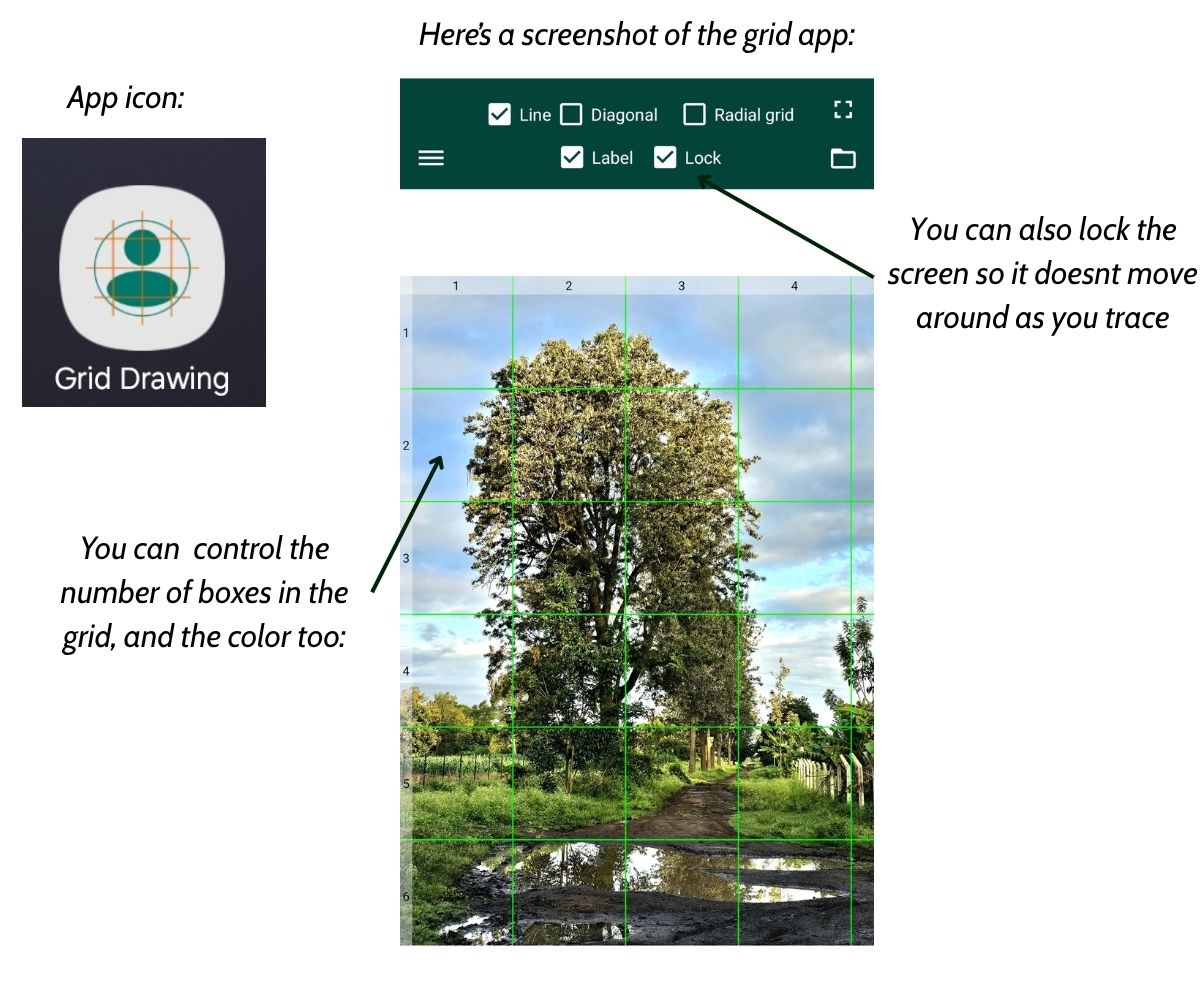
There are some apps you can use to draw a grid over your reference image, including:
- Overgrid for Apple
- Drawing Grid Maker for Android or Grid Drawing
Of all the methods, this is the one I would recommend the most because it will help you start to learn to draw!
Why you should learn to draw
Drawing is a skill you can build over time, not a talent you’re born with.
Taking the time to learn to draw will absolutely change the quality of your work. This is because you’ll be building fundamental skills that will show up in your watercolor paintings:
Observational skills
Learning to draw your subject will force you to observe the size, distance, texture, and space of different elements in a scene.
You could build this skill while only painting with watercolors.
However, it’ll be a lot more overwhelming and difficult because you’ll be focused on getting the drawing and the watercolor techniques right.

Value skills
If you want to paint landscapes that accurately portray depth, you need to know how to translate the values you see in your reference onto the paper.
Pencil drawings are excellent for developing this skill; you can begin to understand light and shadow without the confusion of color.

Quick sketches
Part of the planning process of a good watercolor painting requires sketches. It helps the artist note down the important observations.
Now, of course, you can create your sketches using watercolor; however, with pencil drawings you have more room for error.
It’s easier to change things around, and you can explore different compositions much faster before you get to your watercolors.
Limitations of tracing
While you can still produce decent art through tracing, there are two main limitations that have a major influence over your work.
The first is that you begin to use the traced outline as a crutch, mentally noting that because you’ve traced it exactly as the image, it can’t be wrong.
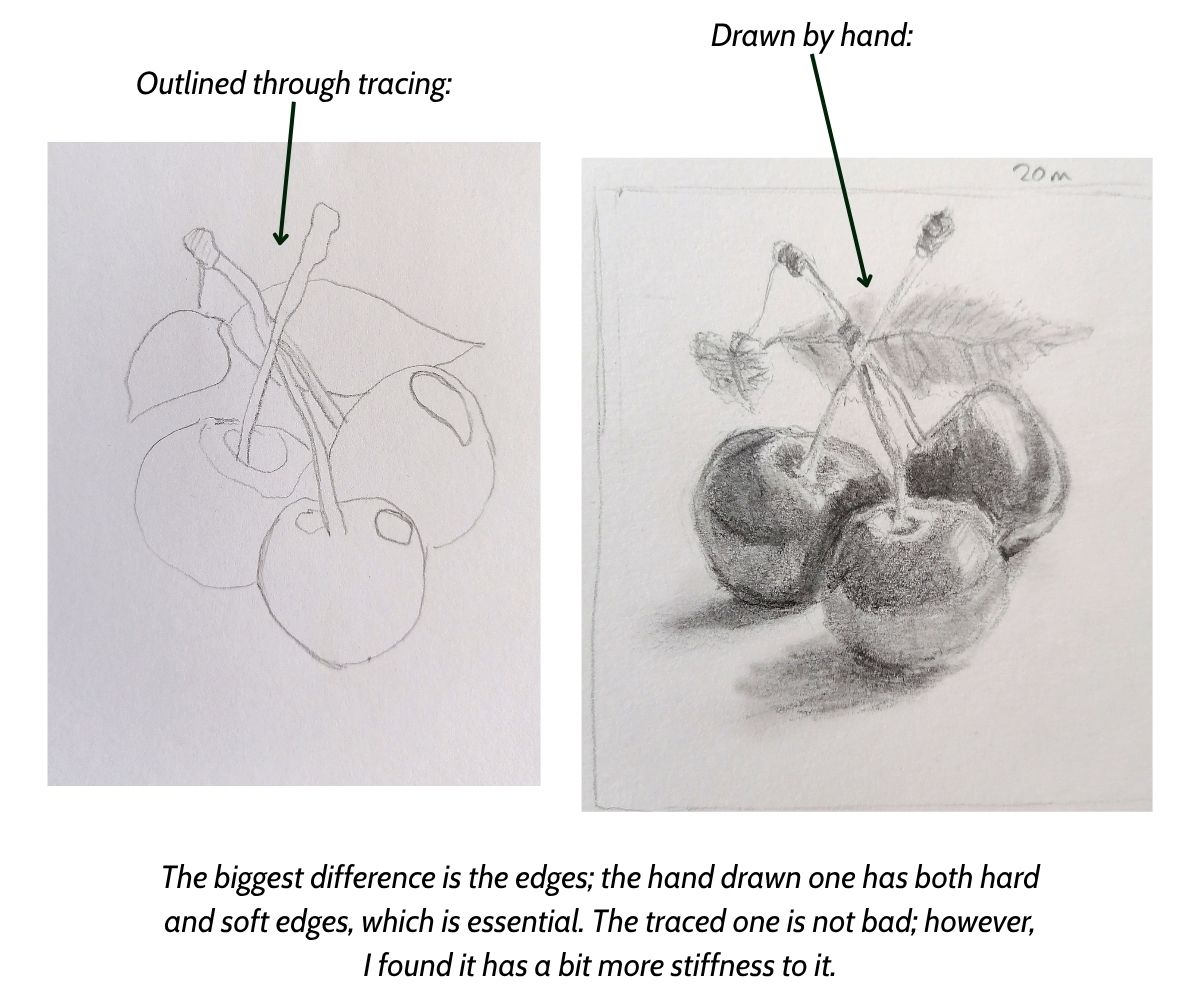
This means you continue filling every nook and cranny of the traced drawing, and this results in a flat, stiff looking piece of artwork.
The second is that you never develop an artist’s natural intuition to fix or alter the design of a drawing to make it look more natural.
The issue with photographs is that they say everything, whereas an artist is telling a story that relies on instinct and practical techniques.
An artist chooses to capture specific elements that aid in the story of a painting.
These instincts develop over time as you sharpen your observational drawing skills.
Here’s an example of the cherries drawing done without tracing vs with tracing:
Learning watercolor and drawing at the same time
An excellent option is to learn how to draw as you learn watercolor painting.
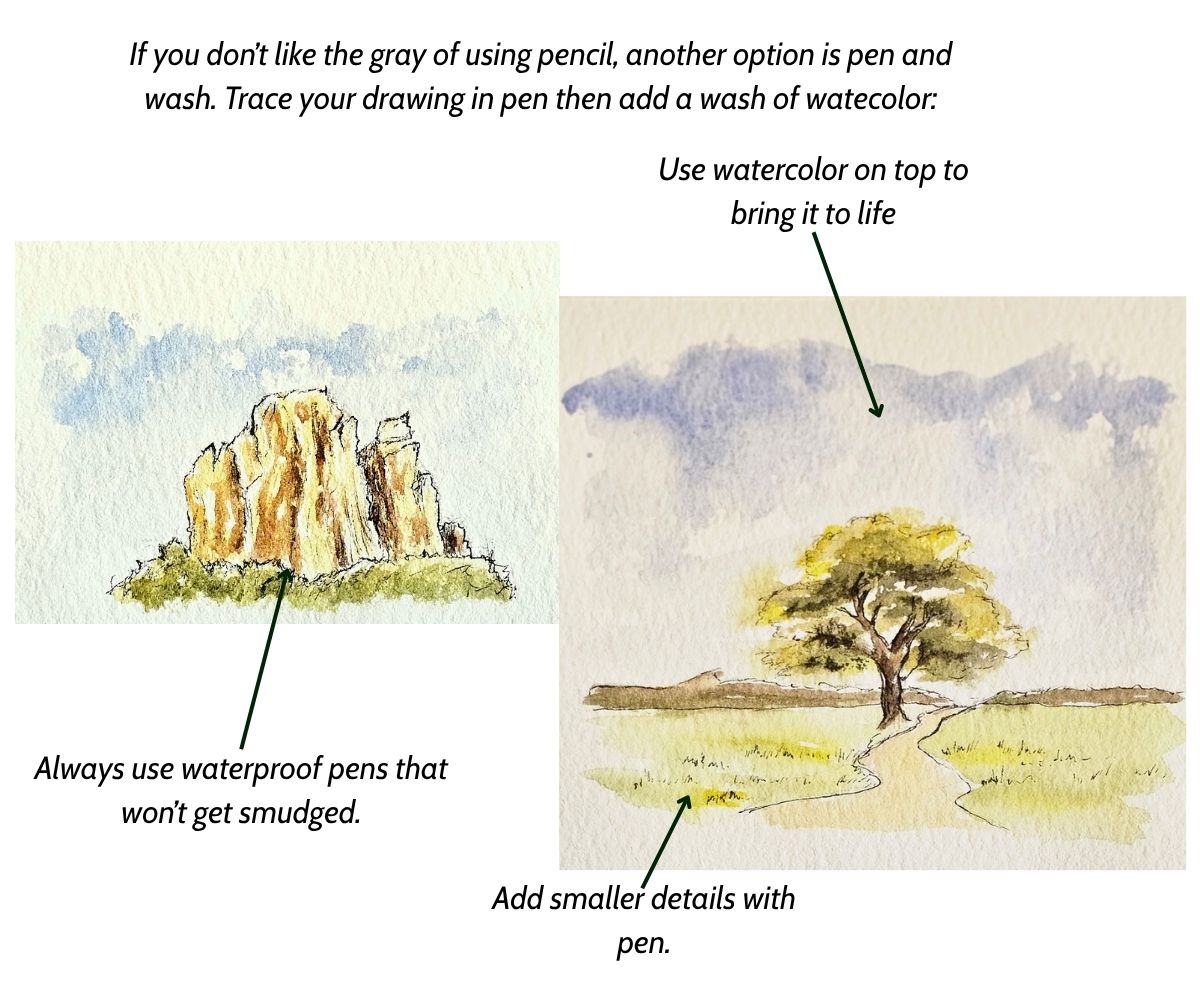
Pencil & Wash or Pen & Wash
Many artists use pencil & wash or pen and wash. They start by creating an initial drawing using pen or pencil, complete the shading and small details, and then lay a wash of watercolor on top.
Here are a few examples of pen/pencil and wash artworks:
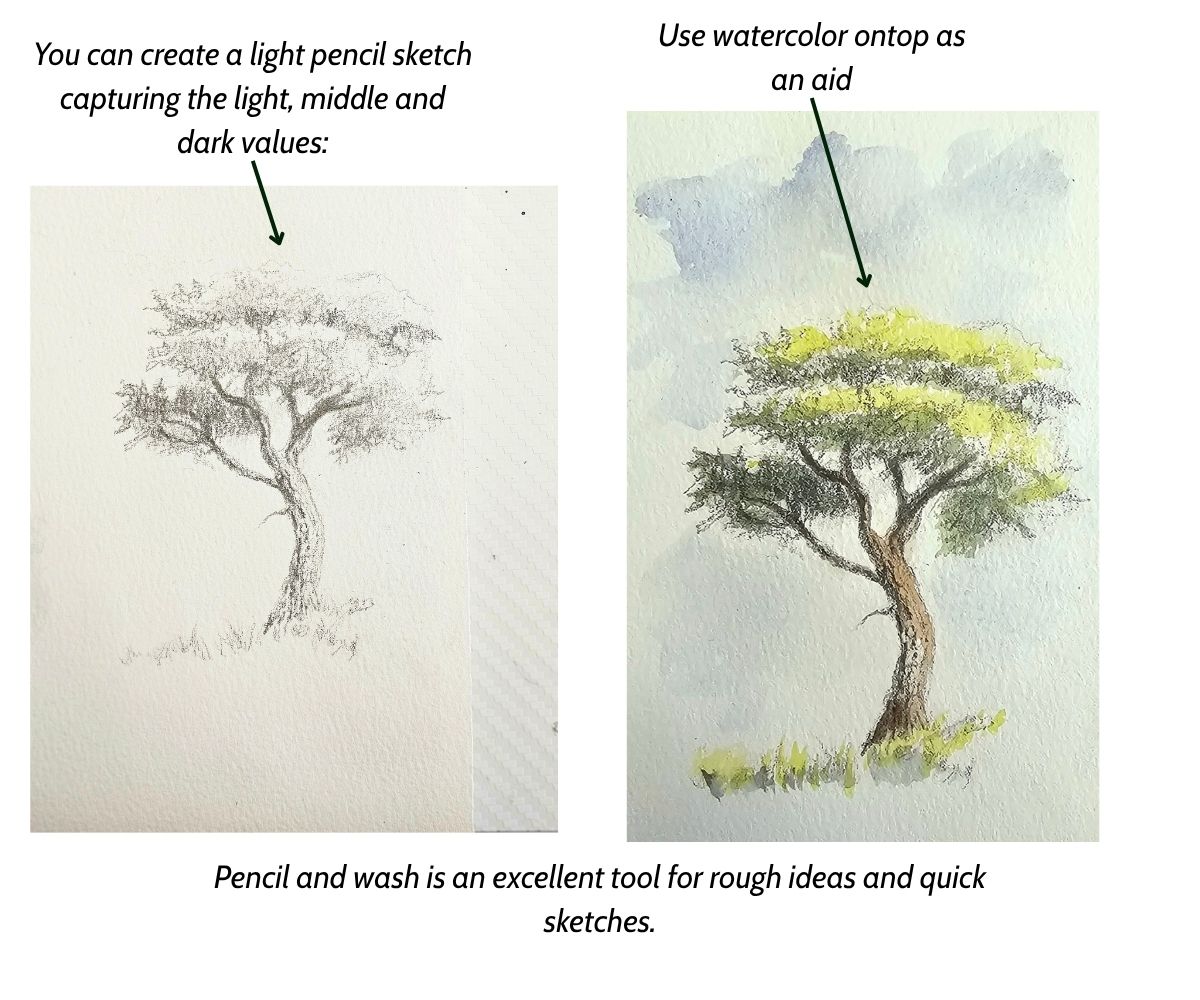
If you’re not a fan of graphite pencil or pen lines, then colored pencils are an excellent alternative. You can let the colored pencils do the heavy lifting while you use watercolor to do the rest.
How to divide your painting sessions
The key to learning both at the same time without getting overwhelmed is to divide your paint sessions. Try to spend some days drawing and some days learning watercolor painting
For watercolors, I would focus on basic techniques, learning water/brush control, and color mixing. I would choose very simple subjects such as a fruit or small object.
To develop your drawing skills, you can focus on basic shapes, then move on to perspective and value. Once you are more comfortable with these, you’ll find these skills transferring to your watercolor paintings.
What do you need to start drawing?
Drawing is probably the easiest medium you can learn. A simple Hb pencil and any paper you have in your home will do.
However, I would recomend purchasing a set of graphite pencils with a range of thickness:
- Graphite pencils- graphite pencils are made according to different levels of softness or hardness. This results in different shades (darker to lighter) when using the pencils.
- Hb, 2b, 4b, 6b, 12b- These are different levels of thickness with Hb being the lightest and 12b being the darkest (in this list). You’ll find the level of thickness written on most pencils.
- Kneaded eraser– You can use a normal eraser however I find that kneaded erasers are far more effective and they last longer.
- Drawing paper– while you can use regular printer paper, however drawing paper is slightly thicker and better in quality.
Conclusion
You can absolutely learn to paint with watercolors if you don’t have any drawing skills. However, it will take you twice as long to achieve higher quality, well balanced paintings.
Learning to draw while learning to paint with watercolors without getting overwhelmed is very possible and the better option. It’ll also be ten times more beneficial.
If you want to learn the essential supplies, techniques of watercolor painting then check out the articles below: